Lenovo is laying off a little more than 1,000 employees with the majority of heads set to roll in the US and China.
The “worldwide resource action” will impact “approximately two per cent of our approximately 52,000 employees globally,” a spokesman confirmed to The Register in a statement.
“While we are making good progress by executing our three-wave strategy and strongly believe that we are on the right path to profitable growth, we are taking this step now to ensure that we are as competitive and as cost-efficient as we can be, particularly with our growth continuing to build momentum in the market place,” he added.
The three-pronged strategy is to protect the legacy PC business, rework the server and smartphone business so it fires on all cylinders - easier said than done - and develop new tech including cloudy stuff.
The spokesman added: “Lenovo will continue to make adjustments in all areas of the business as part of our continued effort to manage costs, drive efficiency and support ongoing improvement in our overall financial performance.
“While doing so, we will continue to invest in our growth engines, including our mobile and data centre businesses, and non-hardware businesses such as artificial intelligence and Big Data,” he added.
The company rep didn’t reveal where the job-cutting would come from in terms of the divisions, but he told us the “majority” would be in the US and China.
Lenovo, which lost its crown as the IT industry’s biggest seller of computers to HP Inc in the second and third calendar quarters of 2017, has struggled to integrate the buys of IBM’s x86 division and Motorola.
The strain that these struggling and loss-making purchases placed on the business can be seen in the results in recent years with sales falling and profits sliding in 2016 and 2017 financial years.
In fiscal ’17 ended 31 March, Lenovo’s sales dipped four per cent to $43.03b. It chopped more than $1.2bn in expenses during the year to $5.43bn which led to a pre-tax profit of $490m versus a pre-tax loss of $277m in the prior twelve months.
In the first quarter ended 30 June, sales dipped to $10.012bn from $10.056bn a year earlier; operating expenses went up 6 per cent to $1.37bn; and pre-tax loss was $69m.
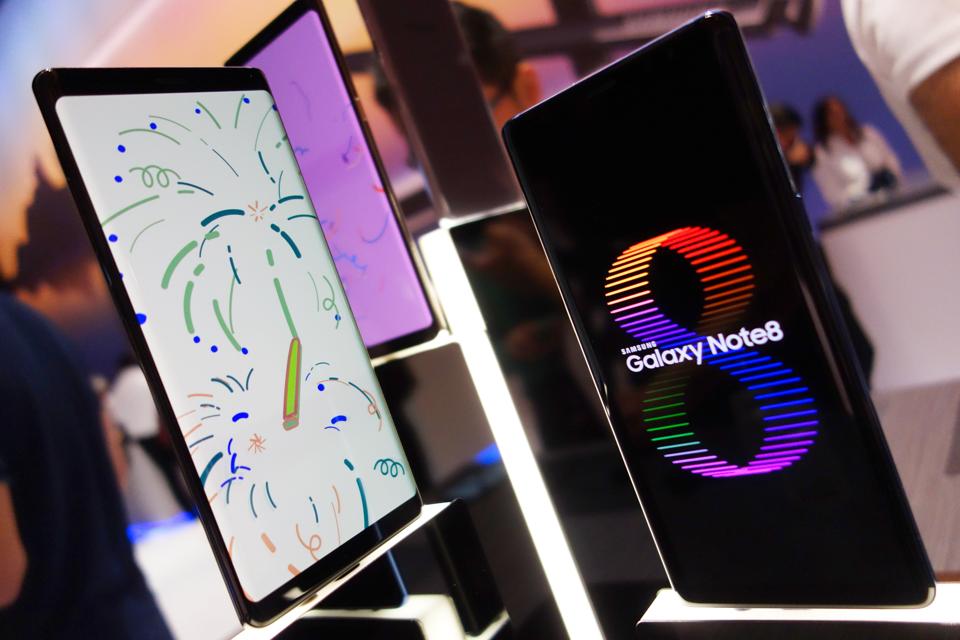
Taking a look back at seven days of news and headlines across the world of Android, this week’s Android Circuit includes new screen technology and biometrics from Samsung, leaked Galaxy S9 and Note 9 hardware, Google fixing some Pixel 2 issues, Nokia 8 moving to Oreo as Samsung works on software issues, OnePlus 5T’s Lava Red edition, and Google’s solution to the emoji cheeseburger.
Android Circuit is here to remind you of a few of the many things that have happened around Android in the last week..
Samsung Turns The Screen Around;
If a smartphone is going to be truly bezel-free (as opposed to the marketing speak version of bezel-free) then the screen is going to have to wrap round all of the sides, and reach the back plate of the device. It looks like Samsung has worked out how to achieve this for a future device. Gordon Kelly reports:
Popular Dutch tech site LetsGoDigital has the scoop having uncovered a brand new Samsung WIPO (World International Property Office) patent which details how the company will build a completely bezel-less phone. And this is not ‘bezel-less’ like the meaningless marketing terms being thrown around by smartphone companies today. This is zero bezels, no notch, nothing.
The patent (WO/2017/204483) shows exactly how Samsung will achieve this. The company plans to use “bent areas” on the main display so it can curve 180 degrees around the top, bottom and sides of the smartphone.
Samsung’s Fingerprint Secrets;
How will you verify your identity on 2018’s Android devices? There’s more proof that Samsung is working hard on improving the ease of use of its fingerprint sensor, as a patent this week exposed a method of reading a fingerprint that is built into the main display assembly.
The international patent was submitted in April 2017, while the Korean patent was filed during 2016, showing that this is a long-standing goal of Samsung’s design team. With smartphone design trending towards larger screens and smaller bezels (or curved edges that tuck the bezel out of sight) the beloved fingerprint sensor has generally been pushed to the back of the machine. It is a suitable surface from an engineering point of view but ergonomically tricky to get a comfortable fit for every user.
Apple’s solution on the iPhone is to switch to facial recognition. Samsung’s solution appears to be getting a fingerprint sensor that works in the main screen area.
But Is This an S9 or Note 9 Fingerprint Sensor?
The question now is when Samsung can roll out the new sensor. Although the ambitious choice would be to push it for the Galaxy S9. Given the reveal at CES is just over a month away the technology should be more widely leaked if it was going to be implemented.
"Given Samsung was long expected to fit the Galaxy S8 with an in-screen fingerprint reader, the news this technology has subsequently run late for both the Galaxy Note 8 and now the Galaxy S9 a year later will be a bitter pill to swallow for many. Especially with patents making it clear Samsung has been hard at work with on this for some time. So fingers crossed for the Galaxy Note 9.
The second announcement ETNews has is less surprising. Its sources confirm Samsung will have no rival to the iPhone X’s Face ID 3D facial recognition system in the Galaxy S9. Instead the report claims Samsung will continue with the combination of an iris sensor and (less accurate and secure) facial recognition using the front camera. Whether this will annoy Samsung fans or see them nonplussed given the fingerprint reader is at least retained, remains to be seen.
Google Prepares Fix For Broken Pixel 2
Following reports of Google’s new Pixel 2 and Pixel 2 XL handsets suffering from random reboots, Mountain View has been looking for a fix. The issue has been found and an update is expected in the near future that will correct the problem Chaim Gartenberg reports:
Fortunately, Pixel 2 and Pixel 2 XL users will have one less thing to worry about soon, as Google has announced that it has identified a problem causing the phones to randomly reboot. It will be issuing a fix “in the coming weeks…” That could come either bundled as part of a monthly security update (which sometimes include Pixel fixes) or a future Android software release.
And finally
Samsung Still Working On Oreo Bugs
Staying with Android Oreo, Samsung is still working out the bugs in its implementation of the update for the Galaxy S8 and Galaxy S8 Plus handsets. Ben Schoon reports on the third iteration:
This latest beta update doesn’t introduce any crazy new features or redesigns, but rather improves on what’s already available with Oreo on the S8. That’s to say, it fixes a lot of issues that beta testers have noticed.
The lengthy change log… mentions fixes for incoming call and camera errors, as well as fixing latency that can be spotted throughout many areas of the software. It specifically calls out lag when unlocking via the fingerprint sensor, and when using Samsung’s keyboard, both areas that would certainly be irritating if they extended to the final build.
Xiaomi the Chinese multinational giant unveiled the successor of Redmi 4A with the long-lasting battery which xiaomi claims to have standby power of 8-Days. The device is said to come with 3000mAh and of course a 5-inch HD display with the pixel density of 296ppi and a resolution of 720×1280.
The Xiaomi Redmi 5A has been launched in India, following its launch in China in October which was marketed as the 'Desh ka Smartphone' in the India, the Redmi 5A has an entry-level price tag as well as specifications.
The biggest highlight of the smartphone is the company's boast of an '8-day battery life', referring to standby time. The Redmi 5A will also come with MIUI 9 preloaded, which should enhance the battery performance of the smartphone.
Otherwise, the smartphone has minor upgrade so compared to the other previous lives of "A's". This device is off two variants and the pricetag isn't too much, however the Xiaomi Redmi 4A, which still on sale here in the country is at Rs. 5,999.
Notably, there are some changes over the China variant - the Indian variant of the Xiaomi Redmi 5A comes with a dedicated microSD card slot, while the China variant has a hybrid dual-SIM slot. Xiaomi has also introduced a 3GB RAM, 32GB storage variant in India, whereas China only had a 2GB RAM, 16GB storage variant. All units sold in India will be 'Made in India'.
Xiaomi Redmi 5A Specification:
The Xiaomi Redmi 5A powered by a Snapdragon 425 chipset clocked at 1.4GHz coupled with 2GB RAM and 16GB of inbuilt storage, another variant of the device has 3GB of RAM and 32GB of internal storage on board. The storage of the phone is expandable up to 128GB via microSD card.
Connectivity options on the smartphone include 4G VoLTE, Wi-Fi 802.11 b/g/n, Bluetooth v4.1, GPS/ A-GPS, Infrared, a 3.5mm headphone jack, and a Micro-USB port.
Sensors on board include an accelerometer, ambient light sensor, and a proximity sensor. It runs on a 3000mAh battery, with 5V/1A charging, rated to deliver up to 8 days of standby time, and 7 hours of video playback. It measures 140.4x70.1x8.35mm, and weighs 137 grams. Also the device runs on Android Nougat along with the Miui 9 on the top.
The smartphone bears a 13-megapixel rear camera with an f/2.2 aperture, coupled with LED flash and PDAF. On the front, the Redmi 5A has a 5-megapixel camera with an f/2.0 aperture. The device has a Dual-SIM (nano+nano) and sports a 5-inch HD (720x1280 pixels) display with a pixel density of 296ppi.
Xiaomi Redmi 5A Price And Availability In India:
Xiaomi Redmi 5A price in India starts at Rs. 5,999 for the 2GB RAM, 16GB storage variant, and goes up to Rs. 6,999 for the 3GB RAM, 32GB storage variant.
However, xiaomi made it clear that the first 5 million units of the 2GB RAM, 16GB storage will be available with a discount of Rs. 1,000 thereby reducing the price down to Rs. 4,999 - making it the cheapest Xiaomi smartphone in the country.
The smartphone will be available via Flipkart and Mi.com, and Mi Home Stores on December 7 at 12pm, before being made available via Xiaomi's offline retail partners across the country. The smartphone will be available in Dark Grey, Gold, and Rose Gold colour variants. Beyond the Rs. 1,000 discount, no launch offers have been mentioned yet.
Developing an application can be a daunting task, but launching it
shouldn’t be. There’s no simple answer to the question of which one
should you develop for first, Android or Apple.
It depends on various number of factors and circumstances which may
influence the final decision. Even if your budget allows you to build a
native application for every existing platform, various factors should
be considered beforehand.
One Platform Paradigm
Building a mobile application for multiple platforms at the same time
will cost you time and money. Especially if your goal is simply to
acquire your first customers. Most customers use only one platform,
therefore there is no sense in making Apple customers wait for your app
to be released on Android. Also, post release maintenance of
applications on two platforms is extremely challenging — it’s far
cheaper and less time consuming to fix bugs for one platform. So it’s best to start with one
platform, but which one to choose first? Let’s consider some factors
that can help us choose the right one:
1) Demographics speaks
Despite lot of platform fragmentation and pain that comes with
developing applications, Android is still the leader among mobile
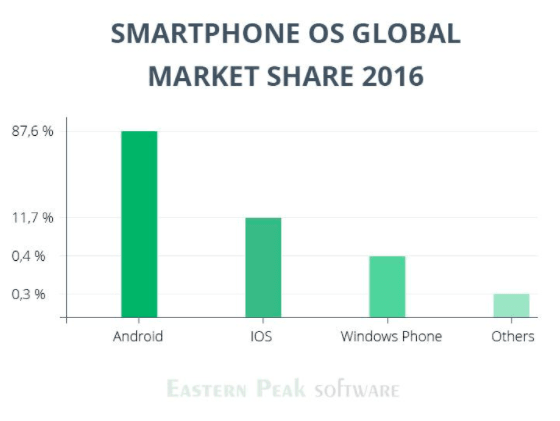
operating systems. Survey says that Android owns more than 86 percent of
global market share — and is especially strong in developing nations.
In second place is iOS, but despite it’s considerably smaller market share, iOS developers make twice the money Android devs do.
Therefore, observing the overall statistics, launching an application
on Android allows it to reach a much broader audience. But on the other
hand, launching an iOS application allows you to reach an audience with
more purchasing power, thus delivering a faster ROI.
2) Future outlook
There is no clear winner between iOS or Android as far as future
prospects are concerned. Both platforms are in good shape and will not
lose relevance within next few years.
Giving preference to one platform over another based on those
prospects isn’t worth discussing as you won’t be losing in either case.
3) Location matters
Although Apple has
a smaller total market share, there are some regions of the world where
Apple dominates the market and where there’s much greater demand for
its products. Examples include countries with
higher standards of living and developed economies like Europe, China,
Asia Pacific and America. So take this into account if you have a
particular country or region in mind.
4) Your target audience
Knowing your target audience is of the utmost importance. Not knowing
your customer is like shooting from the hip. To find your target
audience you also need to know your goals and what type of application
you are going to develop and what services your application will offer.
Knowing your target audience entirely is a long process. But knowing
basic demographics and behavioral patterns of your customer like gender,
income, age, occupation, family status, interests, attitudes, beliefs
and education goes a long way.
By knowing this information it will be easier to identify what type
of device your audience prefers. Determining the right platform of
course require a more detailed analysis of your target audience.
5) Development and deployment
The cost of developing a mobile application largely depends on its
type, complexity and features. Generally, iOS applications can be
launched a lot faster as they lack device fragmentation. It’s believed
that the entropy created with an Android device and OS fragmentation
complicates the development and testing process and will take additional
time and money.
6) Features
Android is an open source operating system and gives more freedom to
developers as it offers more access to hardware and the operating system
itself. This is not possible on iOS. iOS also has some file system
restrictions. Android is a very user friendly operating system in terms
of customization.
As Android is an open source operating system, there are even “mods”
of Android like CyanogenMod or Paranoid Android. This offers developers
deeper access into the operating system itself.
7) Revenue model
iOS users generally have a much higher lifetime value in comparison to Android users.
iOS users are more willing to spend money on their apps. This is more
reason to create paid and retail applications or an application which
offers in-app purchases. From a business perspective, it is better to
start with iOS as the customer is more likely to buy additional content or services within the app.
Android and iOS revenue models are representative of different approaches by Google and Apple. Android has
a higher percentage of ad-supported applications but paid applications
is still very common on iOS. If you are creating a free application and
planning on generating revenue via advertising, Android is a better
choice to start with.
8) Launching in an app store
Google Play Store is
more flexible when it comes to the launch of an application, whereas
App Store has more stringent policy and approval period. When publishing
an application on Google Play you
simply have to create an account, make a one-time payment of $25,
upload your application and you are done. In a few hours you will be
able to download your application. For the App Store the registration process is more involved and you have to pay an annual fee of $99. The application evaluation
process usually takes about two weeks and there is a higher probability
of getting rejected. If that happens you have to wait another two weeks
or more. So make sure that your developers have experience in launching
applications on Apple App Store.
9) Release cycles
Although Android is open source, it
is locked down by carriers and OEMs, and regularly lags behind iOS in
terms of adoption rate of its latest OS version. More than 80 percent of
users on iOS are on some version of iOS 8 which came out in September, 2014. Less than 10 percent of Android users
are on Lollipop which first started in June, 2014. Therefore on iOS you
can focus on supporting the newest versions of the operating system
with certainty that your application will have a broad reach.
10) Loyalty
The last factor to play a vital role in the decision making process
of choosing which platform to develop first is loyalty. Apple users are
locked into an ecosystem that encourages them to stay with Apple
products rather than switch to another vendor.
It’s more likely that Android users will switch to iPhone
and not the vice-versa. With iOS you are able to target a market that
comprises a half a billion high-end loyal customers. And these elite
customers have purchasing power five times greater than Android
customers.
Making the decision
Ultimately, it’s entirely up to you whether you build for iOS or
Android first. General advice is to first start with the iOS platform.
Reasons are driven by demographics, speed to market and cost. Developing
applications on Android first makes sense only if you are targeting
audiences that are squarely focused on Android, especially in the
developing nations. Furthermore, during various stages of
any application there should be great amount of learning on what is
working and what is not working. Try applying all your knowledge across
two platforms. Let’s summarize this write-up: You should look at:
Type of application you are building
Monetization model, paid download, in-app purchasing or other
The markets you are targeting
User demographics
Timeline and budget
Choose the best option which fits your business!
Which platform would you choose for your business, iOS or Android? Share with us in the comments!
Recently,the Andriod oreo 8.0 touched the earth. For now, it is only available for Nexus and Pixel phones which are Google's property but we still hope that a lot of devices will get the Oreo update before the end of this year.
Android Oreo 8.0 has just been launched few weeks back and now it's the rumor of the Android P which is the 9th version of Android.
The rumor is out already, though we cannot confirm if it's true or false but we hope that it might be true.
At the moment, we suppose to be talking about the Android 8.1, 8.1.2, 8.4 and the rest of them but as the case may be, thedevelopment of Android P '9.0' has already stated.
However, there are some few things to consider first before the Android P '9.0' gets completed which includes the name it'll be called, features and a lot more.
That's why, In this post, I'll be sharing with you the top 15 Android P '9.0' suggested names. Definitely, the name of the Android P might come from the names I will list in this article.
Hence, naming of an operating system is one of the first rituals to perform, it has been so before, it still remain so and it'll continue to remain so. Perhaps, it is the formality.
Without more hesitation trying to prolong words, it'll be better to start listing out the suggested names. However, I'll first list the names out then I'll write a brief article based on each name.
Top 15 Android P Suggested Names:
Android 9.0 Pancake.
Android 9.0 Pizza
Android 9.0 Peda.
Android 9.0 Pecan Pie.
Android 9.0 Popover.
Android 9.0 Poached Pear.
Android 9.0 Praline.
Android 9.0 Pandoro.
Android 9.0 Pastry.
Android 9.0 Popsicle.
Android 9.0 Peanut Butter Cookie.
Android 9.0 Parfait.
Android 9.0 Peanut Brittle.
Android 9.0 Pumpkin Pie.
Android 9.0 Pana Cotta.
The above are the list of the suggested names of Android P '9.0', now let's have a brief description about each and every Android P '9' names listed above
Brief Description Of Android P 9.0.
★ Android 9.0 Pancake:
Image: Theo Crazzolara
I've always have the urge that pancake will be listed amongst the Android P '9.0' and with the little research I made, it proved me right.
Pancake is one of the popular, common and most eaten breakfast in America. Not just in America but other countries as well, it can be seen in people's mouth often.
Pancake was firstly identified in the 5th century BC in Ancient Greece, as time passes by, pancake make its way to other countries and region where modifications were made in its recipe.
★ Android 9.0 Pizza:
Image: Depositphoto
Pizza is a common and famous snacks people eats often, I do have some feelings that pizza will be one of the competing names for Android 9.0 and I do have a strong feeling that it'll be one of the finalist that sit for the competition.
Pizza was first documented in AD 1997 in Gaeta and fortunately, it made its way to different parts of central and southern Italy.
Pizza is an Italian food, it is mostly eaten in Italy but as time changes it is seen around the world presently and now turns out to be people's favorites.
★ Android 9.0 Peda:
Image: Ritesh Man Tamrakar
This is totally not in my mind, I was astonished when I saw it amongst the list I got in my research because I didn't expect it (in fact I forgot the name totally).
But as the case may be, Peda is now one of the top listed names for Android 9.0. Hence, people are desperate to give android an Indian, this might seen for another chance to give it the same of the sweet 'Peda'.
★ Android 9.0 Pecan Pie:
Image: cookiespl
According to fossbytes Pecan pie is a different way for Android P '9.0' to go nuts, the corn syrup based buttery dessert uses pecan pie which contains 78 average number of pecan nuts.
As it's chief inclusion and served with different ice cream flavors. However, the national Pecan Pie Day is observed on every 12th of July.
★ Android 9.0 Popover:
Image: dutchbaby
Popover being part of Android P '9.0' is just a coincidence, we can only hope a similar thing would occur when selecting names for Android P.
The reason behind popovers name is that it pops over the edge of the tin, getting a hallow shell in which it is baked. ★ Android 9.0 Poached Pears.
Image: Citrus and Candy
Poached Pears is a fruit powered dessert which begins with the letter P, the pear fruit has to go through all the steamy boiling process before it is turned into something delicious for human consumption.
★ Android 9.0 Praline:
Image: Luca Mogila
Belgian Praline was firstly introduced in the year 1912 which is pronounced as prah-leen, the nuts, chocolates and sugar based confession gave it the name praline after its first appearance in Belgium. ★ Android 9.0 Pandoro:
Image: Armin Kübelbeck/Wikipedia
Pandoro is a Christmas yeast bread which was firstly introduced in Verona, Italy. The icing sugar dust on top of the Pandoro is a way to make the person eating the dessert to think of the snow on the Italian Alps.
The question is, will this bread from ride 18th century have the capability to call itself an Android?. Anyways, let's wait until 2018 when the next Android OS Launch will take place.
★ Android 9.0 Pastry:
Image: J E Therlot
Pastry is a sweet snacks which comes in an uncountable numbers called Baklava and Fill, this snacks is made by ancient people from Egypt which also makes it to be called Egyptian food. Based on the National Pastry Day, it is observed in every 9th of December.
★ Android 9.0 Popsicle:
Popsicle isn’t an actual dessert at heart; it’s a brand name used to promote ice pops, frozen flavored ice. But considering the fact that Google developed interest in KitKat and Oreo, Popsicle might become a choice for the next Android.
★ Android 9.0 Peanut Butter Cookie: Popsicle isn’t an actual dessert at heart; it’s a brand name used to promote ice pops, frozen flavored ice. But considering the fact that Google developed interest in KitKat and Oreo, Popsicle might become a choice for the next Android.
★ Android 9.0 Peanut Butter Cookie:
Image: Jules
It’s another peanut-powered sweet to fall in the list of Android P name suggestions. Peanut Butter is mostly the ‘rescue food’ for workout freaks, who want to have a healthy diet.
But Peanut Butter Cookies can satisfy your random craving for munchies and what would be better than having the cookie on National Peanut Butter Day? Well, it is celebrated on every 12th of June.
★ Android 9.0 Parfait:
Image: Song Zhen
Parfait is a French word which means perfect when it is translated to English, but is it possible that the Android Phone will be called Perfect as it's name?
Anyways, Parfait also has another meaning. It is a frozen sweet dish it France that exists in the US as American Parfait.
★ Android 9.0 Peanut Brittle:
Image: Vegan Feast Catering
Actually, there are two stories related to the invention of Peanut Brittle. A hard sugar candy with embedded peanuts.
First, that it came into existence in South American while the other hints towards an accidental creation by a woman in 1890. The dessert also has its day, called National Peanut Brittle Day which is celebrated on every 26th of January.
★ Android 9.0 Pumpkin Pie:
Image: The CulinaryGeek
Pumpkin Pie is mostly prepared using canned pumpkins, this was originated from North American. This pumpkin pie tradition has not only one but two National Pumpkin Pie days, on 12th October and 25th of December which also improves the Christmas experience.
Pumpkin Pie is almost ubiquitous during Christmas celebrations and Thanksgiving. Its popularity makes it a strong contender for the Android P naming competition.
★ Android 9.0 Pana Cotta:
Image: Ben walton
Panna Cotta is a kind of pudding, finds its origin in Italy where its the English language equivalent of “cooked cream.” The dessert is prepared by mixing sugar and gelatin in warm cream and the taste is improved by adding rum and vanilla. Source:androbliz
Rounding up We still have a lot more of the Android P names but we can figure it out only if you can come up with the idea of name related to P, you can drop your suggestion via the comment box.